


Introduction to Robot Welders
What are Robot Welders?
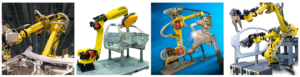
Robot welders are automated systems designed to perform welding tasks using programmable robotic arms. These systems are commonly integrated into production lines to deliver consistent, high-quality welds with minimal human intervention. Typically powered by advanced industrial robotics such as FANUC welding robots, they are capable of performing ARC, MIG, TIG, and spot welding across a wide range of materials and applications.
Unlike manual welding, robotic arm welding systems follow pre-programmed paths with extreme precision. This allows manufacturers to achieve repeatable weld quality at scale, significantly reducing variability and defects. Robot welders are widely used in modern manufacturing environments where accuracy, speed, and consistency are critical.
Across Australian manufacturing, demand for automated welding solutions continues to grow as businesses look to improve productivity while addressing skilled labour shortages.
Importance of Automation in Welding
Welding automation is no longer a luxury—it is becoming a competitive necessity. In industries where structural integrity and production efficiency are critical, automation ensures consistent output while reducing reliance on manual labour.
Automated welding solutions improve workplace safety by reducing exposure to heat, fumes, and repetitive strain injuries. They also help manufacturers maintain consistent production schedules, even during labour shortages.
For Australian manufacturers, adopting industrial robotics such as FANUC robot welders means improved scalability, reduced operational costs, and stronger global competitiveness.
Advantages of Using FANUC Robot Welders
Precision and Consistency
One of the most significant advantages of FANUC welding robots is their unmatched precision. These systems are engineered to perform identical welds repeatedly, ensuring consistent quality across every production cycle.
Human welders can experience fatigue, variation in technique, and inconsistencies over time. In contrast, robot welders maintain exact parameters throughout long production runs. This leads to fewer defects, less rework, and improved structural integrity.
For manufacturers working in high-tolerance industries such as automotive, mining equipment, or structural fabrication, robotic welding systems deliver reliability that manual processes simply cannot match.
Improved Efficiency and Productivity
FANUC robotic welding systems dramatically increase production efficiency. Once programmed, they can operate continuously with minimal downtime, significantly improving throughput.
These automated welding solutions reduce cycle times and allow manufacturers to scale production without proportionally increasing labour costs. In many cases, robot welders can operate 24/7 with only routine maintenance, maximising equipment utilisation.
This level of efficiency directly translates into faster project completion, lower cost per weld, and improved profitability for Australian manufacturers competing in global markets.
Applications of FANUC Robot Welders for Various Industries
Automotive Industry
The automotive industry is one of the largest adopters of robotic welding technology. FANUC robot welders are widely used in vehicle chassis production, exhaust systems, and structural components.
The high-speed precision of robotic arm welding ensures every joint meets strict safety and performance standards. This is essential in automotive manufacturing where consistency is non-negotiable.
Automated welding solutions also allow automotive manufacturers to scale production rapidly while maintaining uniform quality across thousands of components.
Manufacturing Industry
Beyond automotive, robot welders are extensively used across general manufacturing in Australia. This includes metal fabrication, heavy equipment production, agricultural machinery, and infrastructure components.
Industrial robotics enables manufacturers to streamline workflows, reduce bottlenecks, and improve overall production reliability. FANUC welding robots are particularly valued for their adaptability across different materials and welding processes.
By integrating robotic welding systems, manufacturers can handle high-volume production while maintaining strict quality standards.
Integration Process | FANUC Robots for Welding
Planning and Assessment
The integration of FANUC robot welders begins with a detailed assessment of the manufacturing environment. This includes evaluating production requirements, part geometry, welding types, and workflow constraints.
Automated Solutions Australia works closely with manufacturers to design tailored automated welding solutions that align with operational goals. This planning stage ensures that the robotic system is optimised for efficiency and long-term performance.
Implementation and Testing
Once the system design is finalised, technicians install and program the robotic welding system. Engineers configure FANUC robots for specific welding paths, speeds, and parameters to match production requirements.
The team then conducts extensive testing to verify weld quality, repeatability, and safety compliance. Operators receive training to manage and maintain the system, ensuring smooth integration into existing production lines.
The result is a fully operational robotic welding solution capable of delivering consistent, high-quality output from day one.
Future Trends in Robotic Welding Technology
Emerging Technologies in Welding Automation
The future of robot welders is being shaped by advancements in sensor technology, machine vision, and adaptive control systems. Modern robotic welding systems are becoming more flexible, capable of adjusting to variations in real time.
Emerging automated welding solutions are increasingly able to handle complex geometries and dynamic production environments. This makes them suitable for a wider range of industries than ever before.
As technology evolves, FANUC welding robots will continue to lead in precision, reliability, and integration capability.
The Future of Robot Welders in Industry
Robot welders are transforming the future of manufacturing in Australia. With the integration of FANUC welding robots, businesses can achieve unmatched precision, productivity, and reliability.
As industries continue to adopt automated welding solutions, the benefits of reduced costs, improved safety, and increased output become impossible to ignore.
Automated Solutions Australia is at the forefront of delivering advanced robotic welding systems designed to meet the evolving needs of Australian manufacturers. For businesses looking to stay competitive, investing in industrial robotics is no longer optional—it is essential.