



Across Australia, pick and pack operations are evolving rapidly as warehouses respond to rising demand, tighter delivery windows, and increasing labour challenges.
At Automated Solutions Australia (ASA), we design and integrate advanced robotic systems that actively transform traditional pick and pack operations into highly efficient automated workflows. In particular, we leverage FANUC robotic technology to deliver speed, precision, and long-term reliability.
Ultimately, businesses that adopt automation now position themselves ahead of competitors in the logistics sector.
Pick and Pack Operations Explained
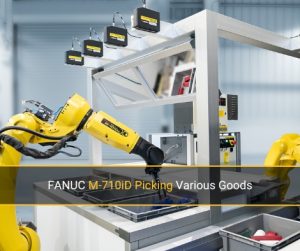
To begin with, pick and pack operations involve selecting products from warehouse inventory (“picking”) and then packaging them for shipment (“packing”). This process sits at the core of fulfilment and directly impacts customer satisfaction.
Traditionally, workers complete this process manually. However, manual workflows often create inefficiencies such as:
- Slower order processing
- Higher error rates
- Labour dependency risks
- Limited scalability during peak demand
As a result, many Australian warehouses are now actively shifting toward automation to improve consistency and throughput.
Why Pick and Pack Operations Require Automation
Several key industry pressures are driving automation adoption across Australia.
Firstly, eCommerce Growth Accelerates Demand
Online shopping continues to expand rapidly. Consequently, warehouses must process significantly higher order volumes with greater speed.
Accuracy Expectations Increase
In addition, customers now expect near-perfect order accuracy and faster delivery times than ever before.
Finally, Cost Pressures Intensify
Therefore, businesses must reduce operational costs while maintaining or increasing output.
Because of these combined factors, automation has become a strategic requirement rather than an optional upgrade.
How FANUC Robotics Improve Pick and Pack Operations
At ASA, we integrate FANUC robotic systems to actively optimise pick and pack operations across Australian warehouses.
FANUC robots consistently deliver strong performance because they offer:
- High-speed motion control
- Exceptional repeatability and accuracy
- Advanced vision system compatibility
- Proven reliability in continuous operation
Moreover, when integrated into warehouse environments, these systems can:
- Identify items using vision technology
- Pick products directly from flow or storage systems
- Sort items by destination or category
- Pack goods into cartons or shipping containers
As a result, businesses achieve consistent throughput even during peak operational periods.
Key Benefits of Automated Pick and Pack Operations
When organisations implement robotic automation, they quickly gain measurable operational improvements.
✔ Accuracy Improves Significantly
Robotic systems eliminate manual errors, ensuring each order is processed correctly.
✔ Throughput Increases
Because robots operate continuously, warehouses can process more orders per hour.
✔ Operations Scale Easily
Businesses can scale output during peak demand without hiring delays.
✔ Finally, Costs Decrease Over Time
Although initial investment exists, long-term savings emerge through reduced waste and higher efficiency.
Where Pick and Pack Automation Is Used in Australia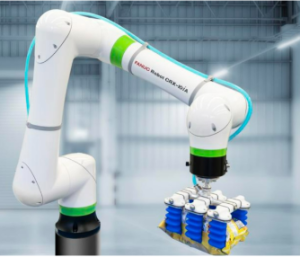
Across Australia, robotic automation is transforming multiple industries:
eCommerce Fulfilment Centres
Firstly, high-volume online retailers rely on automation to meet rapid order cycles.
Manufacturing Distribution
Secondly, manufacturers use robotics to streamline outbound logistics and parts handling.
Retail Supply Chains
In addition, retailers improve inventory movement and reduce dispatch delays.
Logistics Providers
Finally, third-party logistics companies use automation to service multiple clients efficiently.
ASA’s Approach to Pick and Pack Automation
At Automated Solutions Australia, we take a structured, engineering-led approach to warehouse automation. Rather than simply supplying robots, we design complete integrated systems tailored to real operational needs.
1. We Analyse Operations
We assess workflow inefficiencies, bottlenecks, and throughput requirements.
2. We Design the System
We engineer a robotic solution based on product type, warehouse layout, and volume targets.
3. We Integrate FANUC Robotics
We install and connect FANUC systems with conveyors, vision systems, and warehouse software.
4. After That, We Test and Optimise
We refine performance under real conditions to ensure accuracy and efficiency.
5. Finally, We Provide Ongoing Support
We continue to support, optimise, and upgrade systems across Australia.
The Future of Pick and Pack Operations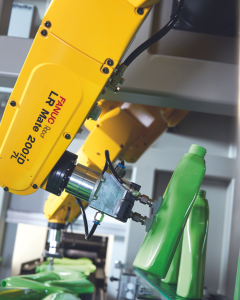
Looking ahead, warehouse automation will continue to evolve rapidly.
Increasingly, systems will incorporate:
- AI-driven decision making
- Machine learning optimisation
- Real-time inventory tracking
- Fully autonomous warehouse networks
As these technologies advance, FANUC robotics will remain a core foundation of reliable industrial automation.
Manual vs Automated Pick and Pack Operations
| Feature | Automated Systems | Manual Operations |
|---|---|---|
| Accuracy | Very high | Variable |
| Speed | High | Moderate |
| Labour dependency | Low | High |
| Scalability | Excellent | Limited |
| Error rate | Low | Higher |
While manual labour still plays a role in flexible environments, automation clearly dominates high-volume fulfilment operations.
Frequently Asked Questions (FAQ)
What are pick and pack operations?
They involve selecting products from inventory and packaging them for shipment in warehouse environments.
How do FANUC robots improve pick and pack operations?
They increase speed, accuracy, and consistency while reducing reliance on manual labour.
Can small warehouses use robotic automation?
Yes. Systems can be scaled depending on order volume and operational needs.
Is automation cost-effective?
Yes. Over time, improved efficiency and reduced labour costs deliver strong ROI.
In conclusion, pick and pack operations in Australia are undergoing a major transformation as businesses adopt automation to stay competitive.
By integrating FANUC robotic systems, warehouses actively improve speed, accuracy, and scalability while reducing operational pressure.
At Automated Solutions Australia (ASA), we continue to help businesses across Australia design and implement advanced robotic automation solutions that deliver measurable, real-world results.
Ultimately, companies that adopt automation today will lead the future of logistics and fulfilment tomorrow.
