



Arc Robots for Smarter Welding Performance
In today’s competitive manufacturing landscape, speed, precision, and consistency directly determine success. As a result, Australian industries are increasingly adopting Arc Robot automation to strengthen welding operations and improve production efficiency.
At Automated Solutions Australia, we integrate advanced robotic systems, including FANUC Arc Robot solutions, to help manufacturers streamline production, reduce labour pressure, and achieve consistent weld quality at scale.
Ultimately, a robot is no longer just an upgrade, but a strategic manufacturing advantage.
What is an Arc Robot?
An Arc Robot is an industrial robotic system designed specifically for arc welding applications such as MIG and TIG welding. These systems execute precise, repeatable welds with high speed and accuracy. Thus, making them ideal for modern fabrication environments.
Unlike manual welding, robotic welding delivers:
- Uniform weld quality
- Reduced defects and rework
- Faster production cycles
- Improved operator safety
In addition, when paired with advanced control systems, Arc Robots can follow complex weld paths while maintaining exceptional repeatability.
Why FANUC ARC Systems Lead the way for Industries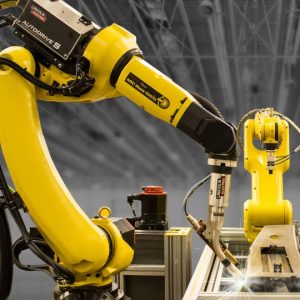
When evaluating robotic welding solutions, FANUC Arc Robot systems consistently stand out for their reliability and performance.
Not only do they deliver precision, but they also maintain exceptional uptime in demanding industrial environments. For this reason, they are widely adopted across Australian manufacturing sectors.
At Automated Solutions Australia, we integrate FANUC systems because they provide:
- Long-term operational durability
- High repeatability and weld accuracy
- Minimal maintenance requirements
- Seamless integration into production lines
Moreover, the real strength of these systems comes from how they are engineered into complete automation solutions tailored to each facility.
ARC Robot Applications for Australian Industries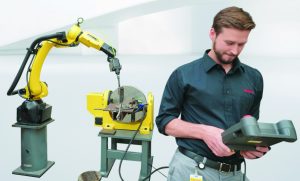
Across Australia, Robot systems are transforming how manufacturers approach welding and fabrication.
Structural Steel & Fabrication
Firstly, robots streamline beam and frame welding, ensuring consistent structural integrity across large-scale builds.
Mining Equipment Manufacturing
In addition, manufacturers rely on Arc Robot automation to produce heavy-duty components capable of withstanding extreme operating conditions.
Automotive & Transport
Similarly, Robots improve precision in chassis and frame production while significantly reducing cycle times.
General Manufacturing
Finally, many Australian manufacturers deploy Robots to overcome labour shortages and increase production consistency.
Key Benefits of Arc Robots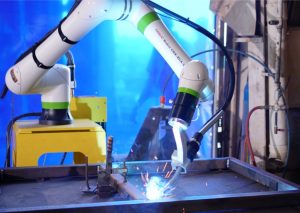
As manufacturers transition toward automation, Arc Robotic systems deliver measurable operational advantages.
✔ Consistent Weld Quality
Most importantly, robots eliminate variability and ensure every weld meets the same standard.
✔ Increased Productivity
Furthermore, these systems operate continuously, significantly increasing throughput.
✔ Reduced Labour Dependency
In addition, they help manufacturers overcome ongoing skilled welder shortages across Australia.
✔ Lower Long-Term Costs
Although initial investment is required, reduced rework and improved efficiency drive long-term savings.
✔ Improved Workplace Safety
Finally, Arc Robots remove workers from hazardous welding environments, reducing exposure to heat, fumes, and arc flash risks.
FANUC Arc Robot Integration: Our Approach at Automated Solutions Australia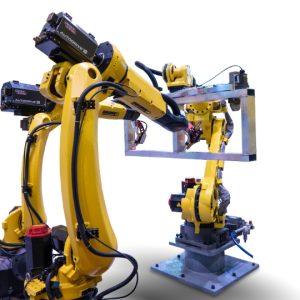
At Automated Solutions Australia, we go beyond supplying equipment. Instead, we design and integrate complete robotic welding systems tailored to each client.
Our FANUC Arc Robot integration process includes:
Process Analysis
To start, we assess existing welding workflows, production bottlenecks, and operational goals.
System Design
Next, we engineer a customised Arc Robot solution aligned with production requirements.
Integration & Programming
After that, we integrate FANUC Arc Robot systems into existing lines and optimise weld paths for performance.
Testing & Optimisation
Then, we rigorously test systems under real production conditions to ensure reliability and consistency.
Ongoing Support
Finally, we provide ongoing support, training, and optimisation across Australia.
Why Australian Manufacturers Are Adopting Arc Robot Systems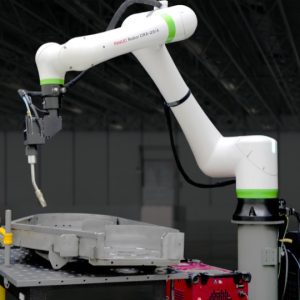
Increasingly, manufacturers across Australia are turning to automation due to industry-wide pressures.
For example:
- Skilled labour shortages continue to grow
- Production demand is increasing
- Global competition is intensifying
- Quality expectations are rising
Therefore, Arc Robot systems are becoming essential rather than optional for long-term competitiveness.
Arc Robot vs Manual Welding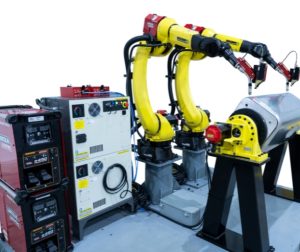
To better understand the impact of automation, consider the key differences:
| Feature | Arc Robot | Manual Welding |
|---|---|---|
| Consistency | Extremely high | Variable |
| Speed | High | Moderate |
| Labour dependency | Low | High |
| Rework rate | Low | Higher |
| Safety risk | Low | Higher |
Clearly, while manual welding remains important for custom work, Arc Robots dominate in repeatable production environments.
The Future of Robotic Technology in Australia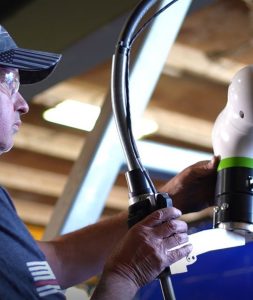
Looking ahead, systems will continue to evolve rapidly.
In particular, we expect advancements such as:
- AI-driven weld optimisation
- Real-time quality monitoring
- Adaptive sensor-based welding control
- Full Industry 4.0 integration
Meanwhile, FANUC continues to enhance its robotic platforms, enabling even greater precision and efficiency.
At Automated Solutions Australia, we actively help manufacturers transition into this next generation of smart manufacturing.
Frequently Asked Questions (FAQ)
What is an Arc Robot used for?
An Arc Robot is used for automated arc welding processes such as MIG and TIG welding in industrial manufacturing.
Are FANUC systems reliable?
Yes — FANUC systems are widely recognised for durability, precision, and long operational life in demanding environments.
Can Arc Robots replace welders completely?
Not entirely. However, they significantly reduce repetitive welding tasks while skilled welders focus on complex fabrication.
Is automation cost-effective?
Yes. Although upfront investment exists, long-term gains in productivity, quality, and labour savings make automation highly cost-effective.
Final Thoughts
In conclusion, robotic welding represents a major shift in Australian manufacturing. As demand for precision and efficiency grows, more businesses are adopting automation to stay competitive.
By integrating FANUC systems, manufacturers gain access to reliable, high-performance welding automation that delivers measurable results.
At Automated Solutions Australia, we continue to support businesses nationwide by designing and delivering advanced robotic welding solutions tailored for real-world production challenges.
Ultimately, companies that adopt this technology today position themselves ahead of the curve for tomorrow’s manufacturing landscape.
