



What is Robotic Sandblasting?
Robotic sandblasting is an automated surface treatment process where robotic systems precisely control abrasive blasting operations. Unlike manual methods, robotic automation ensures consistent coverage, repeatable accuracy, and improved process control.FANUC robotics play a key role in this process by enabling precise movement control, pressure regulation, and path programming. As a result, manufacturers achieve uniform surface finishes across complex parts and large production volumes.Typically, robotic sandblasting is used in industries such as automotive, aerospace, construction, and heavy manufacturing. Furthermore, it integrates into automated production lines, allowing continuous operation with minimal downtime.Ultimately, robotic sandblasting enhances productivity while reducing waste and error.
Traditional Sandblasting in Action

Importance of Automation in Sandblasting
Automation is essential in modern sandblasting solutions because it improves efficiency, consistency, and workplace safety. Traditionally, sandblasting exposed workers to hazardous dust, noise, and physical strain.
However, robotic automation eliminates these risks by fully enclosing the blasting process. Consequently, operators are removed from dangerous environments while maintaining full control of production.
Additionally, automated blasting systems allow precise control of key variables such as pressure, speed, and coverage. This leads to higher-quality finishes and fewer defects.
As Industry 4.0 continues to evolve, robotic sandblasting becomes increasingly important for manufacturers seeking scalable, data-driven production systems.
Overview of FANUC Robotics
Benefits of Using FANUC Robots
FANUC robotics are widely recognised for their reliability, precision, and durability in demanding industrial environments. In robotic sandblasting applications, they deliver consistent motion control and long-term operational stability.
Moreover, FANUC robots are designed to withstand harsh conditions, including abrasive particles and continuous use. As a result, they are ideal for automated blasting systems.
In addition, they offer advanced programming flexibility and seamless integration with industrial automation platforms. This allows manufacturers to upgrade systems without major infrastructure changes.
Overall, FANUC robotics improve efficiency, reduce downtime, and enhance production quality.
Types of FANUC Robots Suitable for Sandblasting
FANUC provides a range of robots suitable for robotic sandblasting, depending on application requirements.
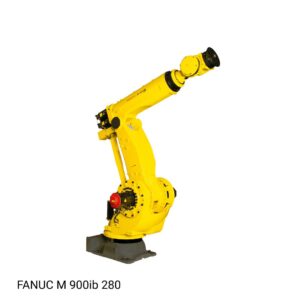
Firstly, large payload robots such as the FANUC M-900 series are ideal for heavy-duty blasting tasks. These systems handle large components like structural steel, automotive frames, and industrial machinery.
Secondly, mid-range robots such as the FANUC M-20 series offer a balance of speed and precision. Therefore, they are suitable for medium-sized parts requiring consistent surface finishing.
In contrast, compact FANUC robots are designed for high-precision applications. These are commonly used in aerospace and medical manufacturing where surface quality standards are extremely strict.
At ASA, we can fully integrate many FANUC robots into automated blasting systems. As a result, manufacturers benefit from improved consistency, reduced material waste, and increased production efficiency.
ASA’s Integration of FANUC Robots
How ASA Enhances Robotic Sandblasting
Automated Solutions Australia (ASA) specialises in designing and integrating FANUC systems tailored to industrial requirements.
ASA engineers optimise every element of the system, including tooling, enclosures, and abrasive delivery systems. As a result, manufacturers achieve higher efficiency and improved performance.
Furthermore, ASA focuses on programming precision and workflow optimisation. This ensures consistent output while reducing cycle times and operational costs.
ASA delivers fully engineered automated blasting systems that are production-ready and highly reliable.
Advantages
Increased Precision and Consistency
Robotic sandblasting delivers superior precision compared to manual processes. Because FANUC robots follow exact programmed paths, they ensure consistent surface treatment every time.
Additionally, automation eliminates human variability, resulting in repeatable outcomes and fewer defects. Consequently, product quality improves significantly.
Moreover, robotic systems allow fine adjustments to pressure, speed, and blasting angle. This ensures optimal performance across different materials and geometries.
Safety and Ergonomics
Robotic sandblasting significantly improves workplace safety. Traditionally, operators were exposed to dust, noise, and vibration.
However, robotic automation removes workers from direct exposure by enclosing the blasting process. As a result, the system greatly reduces safety risks.
In addition, automation eliminates repetitive manual tasks, improving ergonomics and reducing fatigue. Therefore, workers can focus on supervision and system optimisation instead of hazardous labour.
Key Applications of Robotic Sandblasting
Robotic sandblasting is widely used across multiple industries due to its flexibility and precision. For example, in automotive manufacturing, it is used to prepare surfaces before coating or painting, ensuring strong adhesion and durability.
Similarly, in aerospace applications, robotic blasting ensures precise surface finishing on complex components where quality standards are critical.
In heavy industry, robotic sandblasting cleans and prepares large steel structures, improving their longevity and structural integrity.
Additionally, manufacturers in the marine and defence sectors use automated blasting systems to maintain high-performance coatings in harsh environments.

Robotic Sandblasting Improves Manufacturing Efficiency
Robotic sandblasting significantly improves manufacturing efficiency by reducing cycle times and increasing throughput. Because systems operate continuously with minimal downtime, production becomes more predictable and scalable.
Furthermore, automation reduces material waste by precisely controlling abrasive usage. This leads to lower operating costs and improved sustainability.
In addition, robotic systems integrate with industrial automation platforms, enabling real-time monitoring and data-driven optimisation.
As a result, manufacturers achieve higher output with fewer resources while maintaining consistent quality standards.
Challenges and Considerations
Initial Investment and ROI
Although robotic sandblasting systems require upfront investment, they deliver strong long-term returns. Initially, costs may seem high; however, savings quickly accumulate through reduced labour, improved efficiency, and lower material waste.
Over time, most businesses achieve a strong return on investment due to increased production capacity and reduced downtime.
Technical Expertise and Maintenance
Robotic sandblasting systems require technical expertise for programming and maintenance. However, ASA provides fully integrated solutions designed for ease of use.
Additionally, FANUC robots deliver durability and require minimal maintenance, which minimises system downtime.
Regular maintenance ensures long-term reliability and consistent performance across production cycles.
Future Trends in Robotic Sandblasting
Innovations in Robotics
AI, machine learning, and advanced sensor technology drive the future.These innovations allow systems to adapt in real time for improved precision and efficiency.
Furthermore, FANUC robotics continue to evolve, offering smarter automation and enhanced motion control.
Sustainability in Sandblasting Operations
Sustainability is becoming increasingly important in industrial automation. Robotic sandblasting helps reduce waste, optimise abrasive use, and lower energy consumption.
Therefore, automated systems support environmentally responsible manufacturing practices while improving efficiency.
In conclusion, robotic sandblasting powered by FANUC robotics and integrated by ASA is revolutionising industrial surface preparation. It delivers higher precision, improved safety, and greater efficiency across multiple industries.
As automation continues to advance, these systems will remain essential for manufacturers seeking scalable, sustainable, and high-performance production solutions.
