


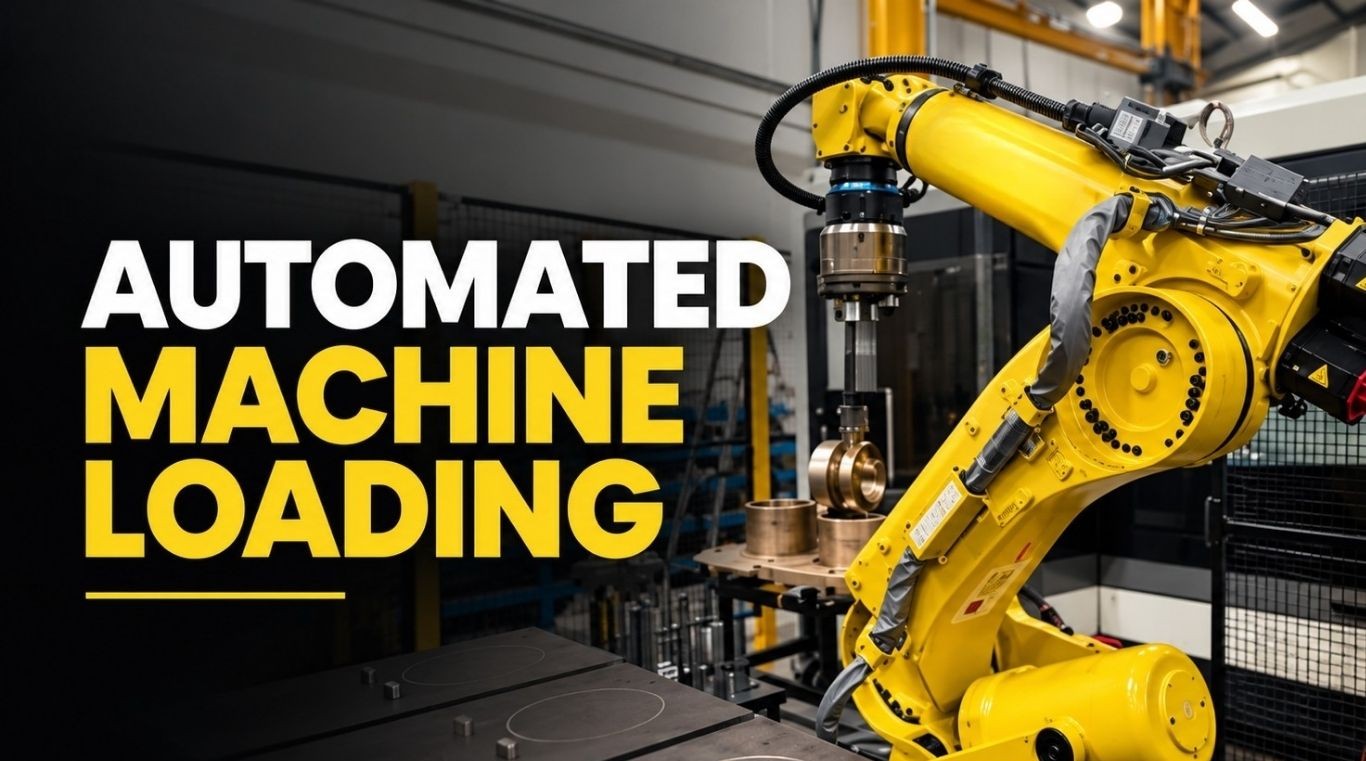

Automated Machine Loading: Transforming Australian Manufacturing with FANUC Robots
Australian manufacturers are under increasing pressure to produce more, reduce costs and remain competitive. At the same time, rising operating expenses and the demand for consistent product quality are forcing businesses to rethink how they manufacture.
At Automated Solutions Australia (ASA), we help manufacturers meet these challenges head-on through automated machine loading, robotic machine tending and advanced FANUC robotic integration.
We know that every minute a CNC machine sits idle is a missed production opportunity. Likewise, when skilled employees spend valuable time repeatedly loading and unloading machinery, manufacturers are not getting the most from their workforce or their equipment.
That is where automated machine loading makes a difference.
By integrating FANUC industrial robots with CNC machines and other production equipment, we help Australian manufacturers automate repetitive tasks, improve machine utilisation and build more productive manufacturing operations. Furthermore, with the right system design, businesses can move towards extended operating hours and lights-out production, allowing machinery to continue producing with minimal routine operator intervention.
This is what we do at ASA: turn robotic automation into practical manufacturing outcomes.
What Is Automated Machine Loading?
Automated machine loading uses industrial robots to load raw materials or components into machinery and remove them once processing is complete.
This is commonly known as robotic machine tending. It involves much more than simply moving a component from one location to another. A successful system coordinates the robot, machine, tooling, workholding and control systems to create a reliable, repeatable production process.
For example, a FANUC robot can collect a raw component from a tray, position it in a CNC lathe, allow the machining cycle to run and then remove the completed part. Next, it can place the finished component in a designated location and load the next workpiece.
Consequently, the machine can spend more time performing productive work and less time waiting for manual loading and unloading.
At ASA, we design and integrate robotic systems around the specific requirements of each application. This includes assessing the machine, component dimensions, payload, production cycle, gripping requirements and the layout of the manufacturing cell.
An automated machine loading solution may incorporate:
- FANUC industrial robots selected for the required payload, reach and cycle time.
- Custom-designed grippers and end-of-arm tooling.
- CNC lathes, milling machines and machining centres.
- Automated part presentation and storage systems (Learn about ASA’s Team Mate here).
- Machine communication and integrated controls.
- Safety guarding, interlocks and operator interfaces.
- Additional handling, inspection or downstream processing equipment.
By bringing these elements together, we create integrated automation solutions that support consistent production and help manufacturers get more from their existing equipment.
How ASA Helps Manufacturers Transform Production
Installing a robot is only one part of the process. The real value comes from understanding how a business operates and engineering a solution that improves the entire production workflow.
At ASA, we focus on the manufacturing challenge first.
Where is production losing time? Which tasks are repetitive? Are expensive CNC machines waiting for operators to load the next component? Could one robot service multiple machines? And, importantly, what would it take to keep production running for longer without constant manual intervention?
These are the questions that shape a successful automation project.

1. We Automate Repetitive Machine Loading and Unloading
Manual machine tending can consume a significant amount of an operator’s time, particularly when production involves repeated cycles and high component volumes.
Our robotic machine loading solutions automate these repetitive movements. A FANUC robot can load raw components, unload machined parts and transfer products between designated locations according to a programmed sequence.
As a result, manufacturers can reduce routine manual handling and establish a more consistent process.
Furthermore, automation can help businesses redeploy skilled employees to machine setup, quality control, maintenance and other tasks where their expertise adds greater value.
2. We Help Manufacturers Get More from Their CNC Machines
CNC machinery represents a substantial investment. However, purchasing advanced equipment does not automatically mean that the equipment is being used to its full potential.
When a machine repeatedly waits for an operator to remove a finished part and load the next component, productive capacity can be lost between machining cycles.
Automated machine loading helps address this problem by coordinating robot movements with machine operation.
Consequently, manufacturers can reduce handling delays and improve machine utilisation.
For businesses looking to increase output without immediately investing in additional CNC machines, improving the utilisation of existing equipment can be an important part of the growth strategy.
3. We Engineer Automation Around the Application
No two manufacturing operations are exactly alike. Therefore, we do not approach every machine loading project with a one-size-fits-all solution.
Instead, we consider the workpiece, machine configuration, production requirements and available space before determining the most appropriate system.
For example, one application may require a compact robot to tend a single CNC machine. Another may benefit from a larger robotic cell with automated component storage, multiple machines and integrated part handling.
In both cases, the objective remains the same: create a reliable solution that addresses the manufacturer’s actual production requirements.
Our focus on FANUC robotic integration allows us to match the robot and associated equipment to the application, rather than forcing the manufacturing process to fit an unsuitable system.
FANUC Robots for Automated Machine Loading
FANUC industrial robots are central to the automation solutions we integrate at ASA.
With a broad range of robot configurations available, FANUC technology provides options for manufacturers with different payload requirements, machine layouts and production objectives.
However, choosing the right robot involves more than comparing specifications.
We consider the complete application, including the weight of the component and gripper, the robot’s required reach, access to the machine, cycle timing and the movements needed to complete each operation.
Just as importantly, we engineer the surrounding equipment and control logic to ensure the robot can work effectively with the machine.
Robotic CNC Machine Tending
CNC machine tending is one of the most practical applications of industrial robotics.
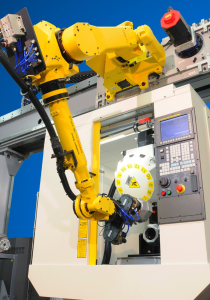
A FANUC robot can load and unload compatible CNC lathes, milling machines and machining centres, helping automate the repetitive tasks that connect machining cycles.
For manufacturers producing repeatable components, this creates an opportunity to establish a more consistent production process.
Explore our CNC machine robotic automation solutions to see how robotic integration can support your manufacturing operation.
Multi-Machine Automation
In some manufacturing environments, a robot can service more than one machine.
When the layout, robot reach and cycle times permit, multi-machine tending can coordinate loading and unloading across several production stations.
This can help reduce unnecessary operator movement and improve the flow of components through the facility.
Nevertheless, the system must be carefully engineered to balance machine cycle times, robot availability and production requirements. We assess these factors when determining whether a single-machine or multi-machine solution offers the best outcome.
Integrated Material Handling
Automated machine loading also creates opportunities to improve material flow beyond the machine itself.
A robot can transfer raw components from storage, move finished parts to inspection or finishing stations, and coordinate with conveyors or other handling equipment.
Consequently, manufacturers can develop a more connected production environment rather than automating isolated tasks without considering the wider workflow.
At ASA, we look at how each robotic application fits into the overall manufacturing process, helping businesses identify opportunities for further automation as their needs evolve.
Lights-Out Production: The Next Step in Manufacturing Automation
One of the most compelling opportunities presented by automated machine loading is the ability to support lights-out production.
Lights-out manufacturing allows appropriately configured production equipment to operate for extended periods with minimal routine operator attendance. Depending on the application, this may include running through breaks, outside standard shifts or overnight.
For manufacturers, the potential is significant.
Instead of limiting production to the hours when an operator is available to load a machine, a properly engineered robotic system can keep suitable equipment producing through a greater portion of the day.
However, lights-out production requires more than installing a robot beside a CNC machine. The complete process must be designed to operate reliably with limited intervention.
At ASA, we consider the wider requirements of the application when developing automated machine loading systems.
Reliable Part Presentation
The robot needs a reliable supply of components to load. Therefore, the system must provide suitable part storage, presentation and handling arrangements for the intended production run.
Depending on the application, this may involve trays, racks, conveyors or other storage solutions.
Safety and Maintenance
Lights-out operation must be supported by an appropriate safety design, suitable equipment and documented operating procedures.
Manufacturers must also plan for maintenance, recovery from faults and situations requiring operator intervention.
The goal is not simply to make a machine run unattended. It is to build a production system capable of operating reliably, safely and productively for longer.
That is why we approach lights-out manufacturing as a complete automation project, with machine loading forming a critical part of the solution.
The Business Benefits of Automated Machine Loading
When the right application is automated effectively, manufacturers can realise benefits across production, workforce utilisation and operational performance.
Increased Machine Utilisation
By reducing the time machines spend waiting for manual loading and unloading, robotic automation can help manufacturers make better use of existing equipment.
This is particularly valuable where CNC machinery is a production bottleneck or represents a significant capital investment.
More Consistent Production
Robots repeat programmed movements, supporting consistent handling and positioning. Combined with appropriate tooling, workholding and process controls, this can help establish predictable production cycles.

Reduced Repetitive Handling
Automating selected loading and unloading tasks can reduce the amount of repetitive manual handling required throughout a shift.
As a result, employees can focus on supervision, quality assurance, maintenance and other important manufacturing activities.
Greater Production Flexibility
Depending on the system design, robotic machine loading can accommodate different components, production sequences and manufacturing requirements.
With suitable tooling and programming, a system may support multiple workpiece types without requiring an entirely new automation installation for every product.
Opportunities for Extended Operating Hours
Where the application is suitable, automated machine loading can help manufacturers extend production beyond conventional staffed hours.
Over time, this can support a broader lights-out manufacturing strategy and create opportunities to increase productive capacity using existing machinery.
The actual benefits depend on the application, production demand, system reliability and implementation costs. For this reason, we encourage manufacturers to assess the business case against their current operating performance and objectives.
Why Choose Automated Solutions Australia?
At Automated Solutions Australia, industrial robotic integration is our business.
We work with Australian manufacturers to identify automation opportunities, integrate FANUC robots and engineer solutions around real production requirements.
Our expertise extends across machine tool tending, robotic welding, automated paint finishing and robotic palletising. This breadth of application experience helps us understand how individual robotic systems fit into the wider manufacturing environment.
For automated machine loading, we focus on the details that determine whether a solution performs as intended: robot selection, gripping, machine communication, production timing, safety and the movement of components throughout the cell.
Furthermore, we understand that an automation project must deliver practical value. The objective is not to install technology for its own sake. It is to help manufacturers improve their processes, make better use of equipment and build a stronger foundation for future growth.
From our bases in Adelaide and Melbourne, we deliver robotic integration solutions to manufacturers across Australia.
Whether you are considering automating one CNC machine or developing a more comprehensive robotic production cell, we can help you assess the opportunity and determine the right approach.
Explore our industrial automation solutions or visit Automated Solutions Australia to learn more about our capabilities.
Ready to Automate Your Machine Loading?
Automated machine loading offers Australian manufacturers a practical pathway towards more productive, consistent and flexible manufacturing.
By integrating FANUC robots with CNC machinery and associated equipment, businesses can reduce repetitive manual handling, improve machine utilisation and create opportunities for extended production hours.
Moreover, when machine loading forms part of a properly engineered system, it can help lay the groundwork for lights-out manufacturing.
At ASA, we help manufacturers turn these opportunities into working automation solutions.
If your CNC machines are waiting for operators, your production is constrained by manual loading, or you want to explore lights-out manufacturing, let’s talk.
We can help you assess your application and identify where FANUC robotic integration could make a measurable difference.
Frequently Asked Questions About Automated Machine Loading
What is automated machine loading?
Automated machine loading uses industrial robots and integrated equipment to load workpieces into machinery and remove completed or partially processed components. It is widely applicable to CNC machining and other repetitive manufacturing processes.
How does automated machine loading improve productivity?
Automated machine loading can reduce delays between production cycles by coordinating robot movements with machine operation. Consequently, manufacturers may improve machine utilisation, reduce repetitive handling and establish more consistent production workflows.
Can automated machine loading support lights-out manufacturing?
Yes. When the complete production system is designed for reliable extended operation, robotic machine loading can support lights-out manufacturing. Suitable part storage, process monitoring, fault handling, machine integration and safety arrangements are essential.
Can FANUC robots load and unload existing CNC machines?
In many cases, yes. FANUC robots can be integrated with compatible CNC lathes, milling machines and machining centres. The feasibility depends on machine interfaces, available space, workpiece requirements and the safety design.
Can a robot tend multiple CNC machines?
Yes, where robot reach, payload, cycle times and machine layout permit. Multi-machine tending can help coordinate production across several machines, although each application requires careful engineering.
Is automated machine loading suitable for small and medium-sized manufacturers?
Yes. Manufacturers do not necessarily need to automate an entire production line. Automating one machine or one repetitive process can provide a practical starting point when the expected benefits justify the investment.
Who can help Australian manufacturers implement automated machine loading?
Automated Solutions Australia integrates FANUC robotic systems for Australian manufacturers. Our team can assess machine loading applications and develop robotic solutions around production requirements, machinery and operational objectives.