

Comparative Analysis of Arc vs. Spot Welding Techniques
Arc welding and spot welding are two distinct methods of welding. They employ different techniques and equipment to achieve metal coalescence. Both processes are integral to manufacturing and construction. So their applications and outcomes cater to different needs. Additionally, they cater to different industry requirements. Therefore integration of robotic systems such as those offered by FANUC has revolutionised these welding techniques. This is by enhancing precision, efficiency, and consistency in production lines.
What is Arc Welding?
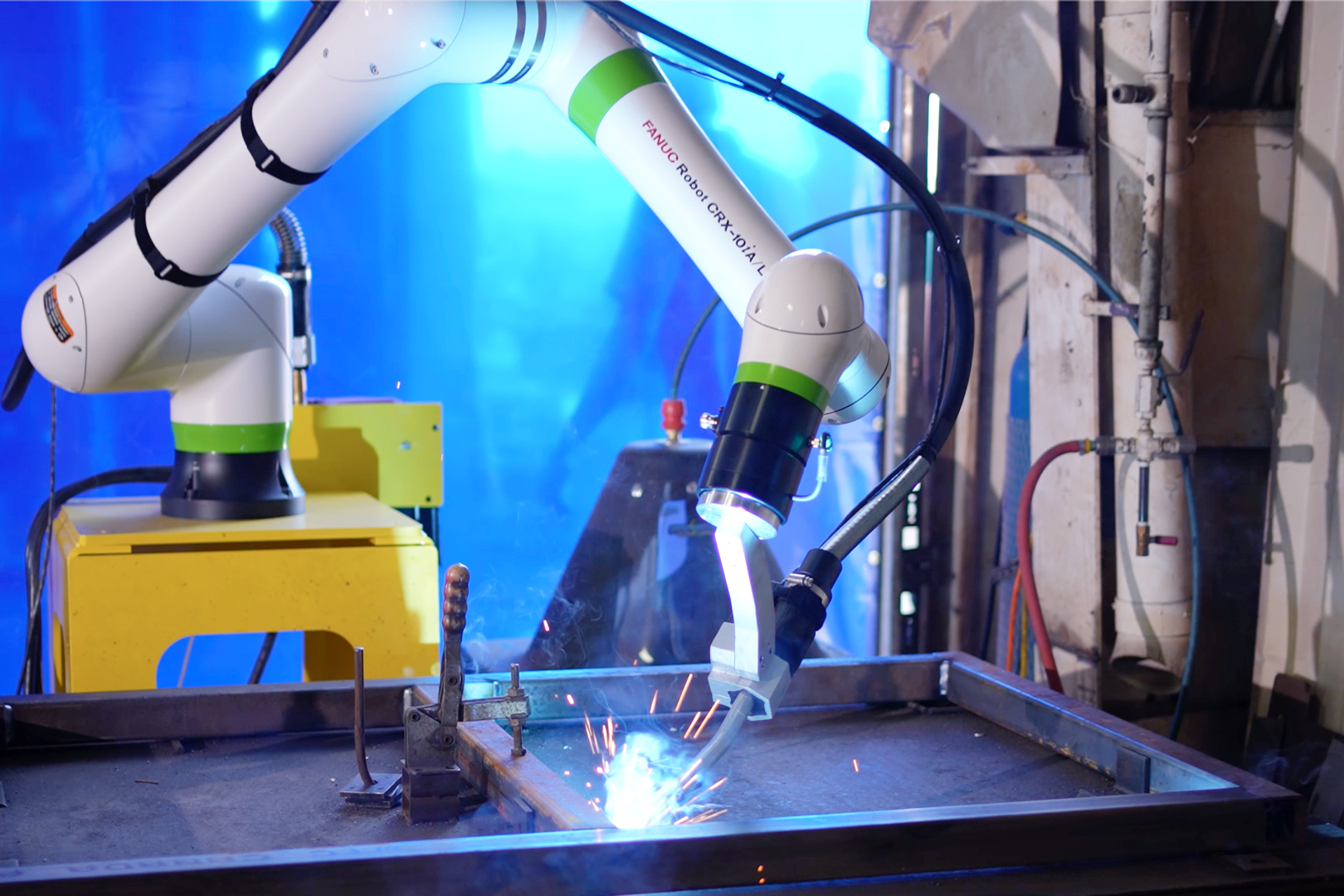
Arc welding is a fusion welding process that joins metal pieces using the heat generated from an electric arc. The arc is struck between the workpiece and an electrode, which may be consumable or non-consumable. The intense heat of the electric arc melts the metals at the welding point. So this then allows them to fuse as they cool.
In arc welding, several variants exist such as Metal Inert Gas (MIG), Tungsten Inert Gas (TIG), and Stick welding. Each having its specific applications based on the type of metal, desired strength, and finish of the weld. MIG welding is fast and is suited for longer welds on thick materials, TIG welding is used for high-quality, precise welds, and Stick welding is versatile and can be used outdoors and on dirty or rusty metals.
FANUC offers a range of arc welding robots designed to increase the precision and production rate of the welding process. The robots can handle complex welding paths and multiple weld processes, ensuring high-quality welds with minimal splatter and waste.
What is Spot Welding?
Spot welding, on the other hand, is a resistance welding process that joins metal sheets by applying pressure and heat generated from an electric current to the area to be joined. Unlike arc welding, which can create long, continuous welds, spot welding joins metals at individual points. The electrodes used in spot welding are typically made of copper alloy and are designed to be able to hold the workpieces together and conduct the current.
This process is commonly used in applications where sheet metal requires joining, such as in the automotive industry for assembling car bodies. Spot welding is quick and efficient for joining thin sheets, and the size of the weld spot can be controlled to achieve the desired strength and aesthetics.
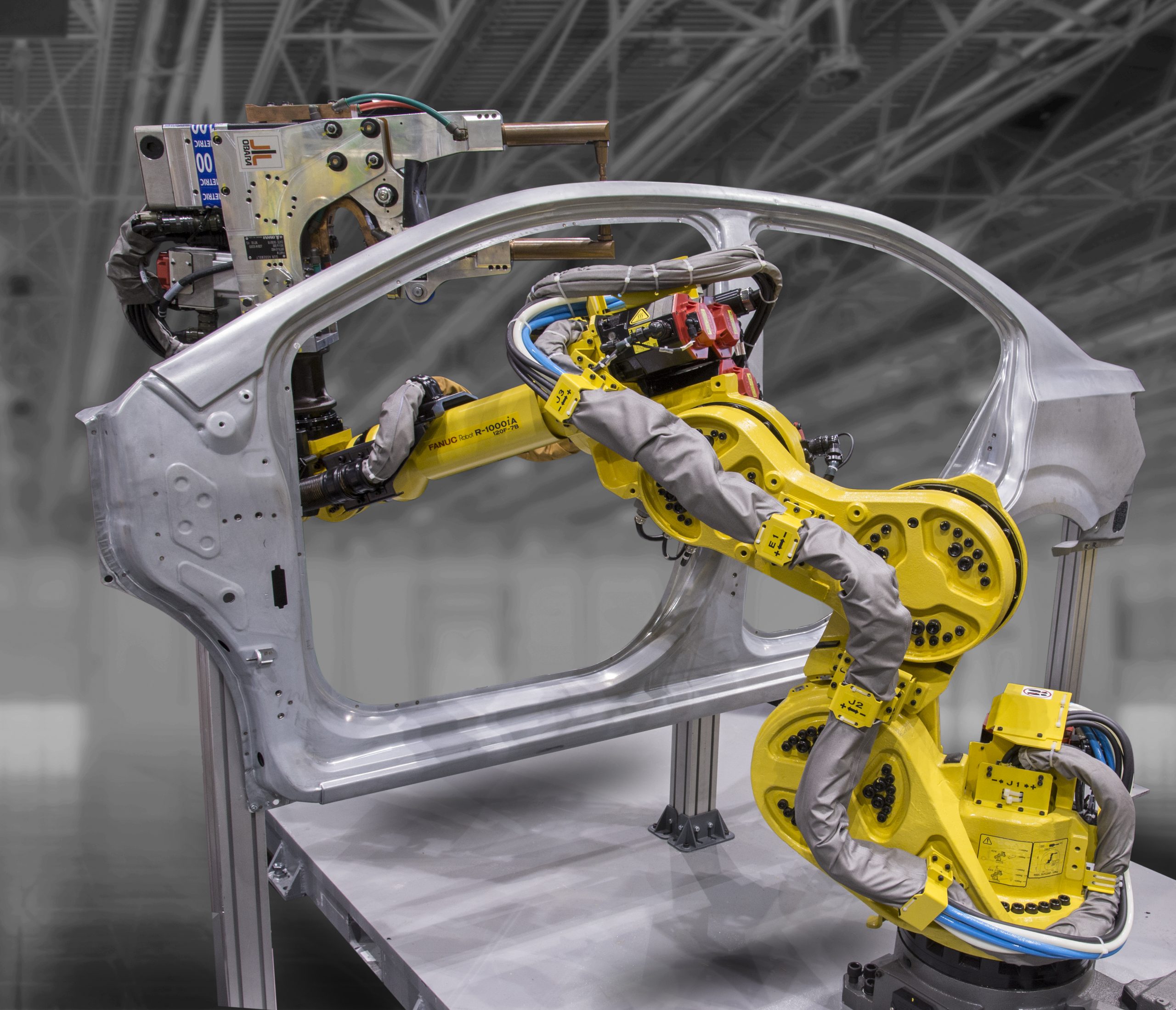
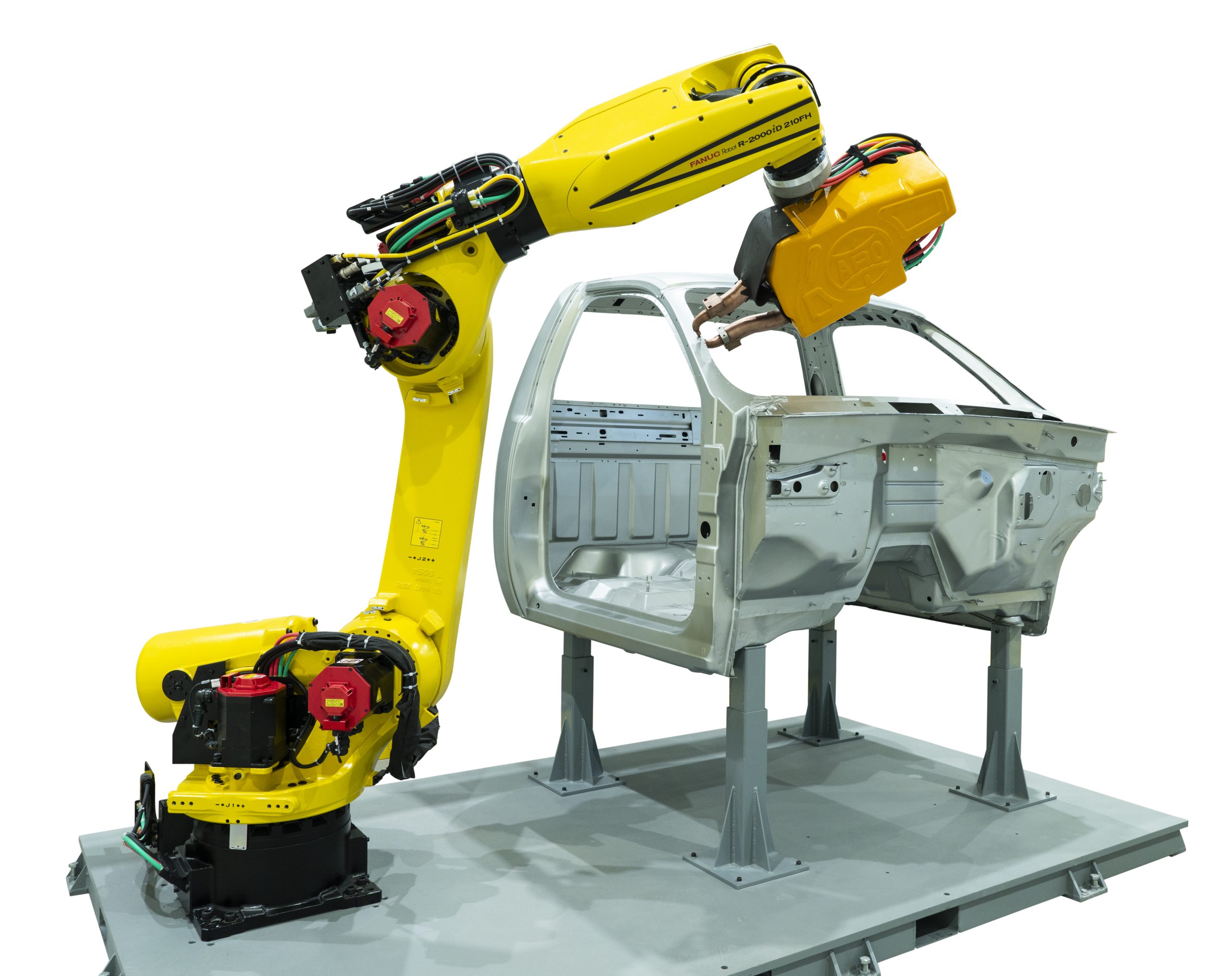
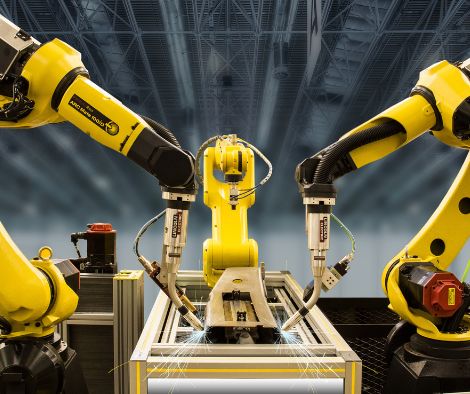
FANUC offers specialised robots for spot welding, which are widely used in the automotive and fabrication industries. These robots provide high-speed welding and are capable of handling large payloads, which is beneficial when large or multiple spot welding guns are required.
Arc vs. Spot Welding – Robotic Integration with Automated Solutions Australia (ASA)
At Automated Solutions Australia (ASA), we specialise in integrating FANUC robotic welding systems, including those for arc and spot welding, into a variety of industries. By assessing the unique needs of each client, we can provide tailored solutions that enhance production efficiency and quality.
Our integration process involves the selection of appropriate robots, design of custom tooling, programming for optimal weld paths, and the implementation of safety measures to ensure a seamless and secure production environment. Whether it’s incorporating FANUC arc welding robots to perform precise welds on complex assemblies or deploying spot welding robots to rapidly join sheet metals, ASA has the expertise to automate and streamline welding processes.
Arc vs. Spot Welding – Flexibility and Reliability with FANUC
The flexibility and reliability of FANUC robots, combined with ASA’s integration services, allow companies to boost productivity, maintain consistent weld quality, and reduce operational costs. The adaptability of these robotic systems means they can be utilised in industries ranging from automotive to aerospace, and from heavy machinery to custom metal fabrication.
In summary, while arc welding and spot welding serve different welding requirements, the use of FANUC robots within these processes significantly enhances the capabilities of these techniques. Automated Solutions Australia plays a crucial role in integrating these advanced robotic solutions into the industrial workflow, empowering industries to advance towards more efficient and technologically driven manufacturing processes.

Send an Enquiry:
Click an Application to Explore Further:
FANUC Robots Australia | Paint Robots for Surface Finishing | Welding Robots by FANUC | Machine Tool Tending Robots | Fibreglass and Gelcoat Robots | Palletising Robots | Robotic Vision Inspection Systems | Plastics Painting | Deburring and Polishing | Sealing and Dispensing | Picking and Packaging | Material Removal Robots | Shot Blasting and Peening |
More (Recent) News Stories from Automation Solutions Australia:
Deburring Machines | Robots a Historical Overview | Robotics Engineering | Automatic Paint | Robotic Loading Systems for CNC | Unlocking Your Manufacturing Potential | Spray Painting Robots | Automatic Sandblasting | CNC Mills | Automated Welding | Unlock the Future with Automation Systems | Robot Company, The Automation Era | Choosing an Automation Company | Harness the Power of Robotics with ASA | Robotic Painting | Automotive Welding | The Path to Machine Tool Automation | System Integrator Australia | Robotic Welders | Automate your CNC | Automation Company | Electrical Design | Human Machine Interface | Plastic Paint Robots | PLC Programming | Robotics Australia | Solutions | Industrial/Manufacturing Robots | Industrial Engineering |